
Description
SEE THE DOCUMENTS TAB TO DOWNLOAD A FIRING SCHEDULE
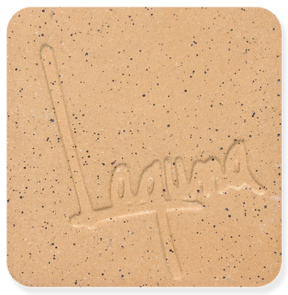
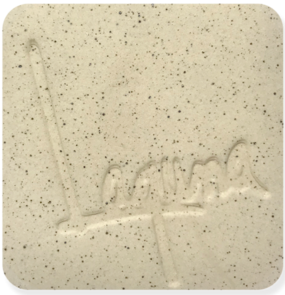
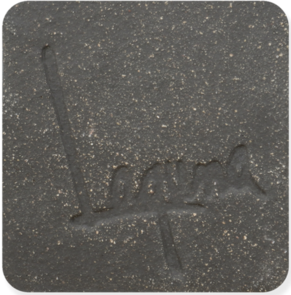
Laguna Chocolate Casting Slip is a medium, richly hued porcelain casting slip.
Characteristics
Cone:5-6
Avg. Shrinkage 2±% :11%
Avg. Absorption: 0%
Test Procedures
To determine if the slip is properly prepared, you need to measure two properties: Specific Gravity and Viscosity.
You should measure and adjust Specific Gravity before you test and fine-tune the Viscosity. Specific Gravity can be tested after the mixing time indicated in the table above. Viscosity should be tested no sooner than 12-24 hours after the batch is mixed.
This allows the clay particles time to hydrolyze, or become wet on all surfaces. If the viscosity is adjusted before hydrolyzation is complete, you are likely to over-deflocculate the slip.
Specific Gravity Test
After all lumps are blended away.
1. Remove the stopper from your viscometer and weigh the dry, empty flask.
2. Fill the flask with slip up to the 500ml mark.
3. Weigh the filled flask on your gram scale.
4. Subtract the weight of the flask from the total weight. The result will be the net
weight of 500ml of slip.
5. Divide the gram weight of the slip by 500 to establish the Specific Gravity. Example:
A slip weight of 875 grams ÷ 500 gives a Specific Gravity of 1.75. Experience will
teach you which weight is most appropriate for your casting conditions, and most casting slips work best between 1.72 and 1.80 Specific Gravity.
Viscosity Test
12-24 hours after batch is mixed.
1. Fill the flask to the 500ml mark and insert the stopper.
2. Hold your finger over one hole in the stopper and turn the Viscometer upside down.
3. Release your finger from the hole and time the flow of slip until you count one second between drops. Normally the slip will flow through in 100 to 130 seconds. A fast flow time (thin slip) can lead to a slower setting time and more brittle ware. A slow flow time (thick slip) will set up faster in your molds but render ware that is less dense.
4. Tips:
A. If the slip weight is normal, it is highly unusual for the flow rate to be less than 100 seconds per 500ml.
B. If the slip weight is normal and the flow time is more than 130 seconds, you may need a little more diluted Sodium Silicate or Dispersal. Never add water - it changes the Specific Gravity.
C. After testing, always wash your Viscometer with cold water and 5. store at room temperature.
Adjusting the Batch
If your Specific Gravity is too low, add more clay to the batch. Then you need to wait while the addition mixes completely through the batch. With every clay addition, you should mix the batch for the fully recommended time (i.e. 3 hours for a 300 lb. batch).
If the Specific Gravity is too high, add water. If the Viscosity is too high, add deflocculant. You need to wait just twenty minutes for these additions to mix through the batch before re-testing.
If your Specific Gravity or Viscosity are not within the recommended limits, but your slip casts well, you should not make any adjustments!
?Over-deflocculation
Sodium silicate is the most common economical and powerful deflocculant. Unfortunately, it can quickly turn from your friend to your foe. Initial additions of sodium silicate serve to thin (deflocculate) the batch. However, there is a point after which sodium silicate starts to have the opposite effect, actually making the batch thicker (flocculating it). Compounding the difficulties is the fact that sodium silicate accelerates its effectiveness as it nears the point of over-deflocculation. For example, you might add one ounce to the batch three times, with little improvement in Viscosity, but the fourth addition will send the batch over the limit. That is why it is recommended to use small additions until you are familiar with slip making.
If you add sodium silicate and the slip gets thicker instead of thinner, it is over-deflocculated, and you have two options: you can try to recover the batch or throw it away. If your slip is badly over-deflocculated, it is very difficult to correct and will cost you more in time and frustration than the purchase of new slip. If the batch is slightly over deflocculated, you can bring it back with the addition of more dry material. Determining the correct amount will be trial and error, but with every clay addition, you should mix the batch for the fully recommended time (i.e. 3 hours for a 300 lb. batch).
If you believe you are close to over-deflocculation, it is time to switch from sodium silicate to dispersal. Dispersing agents such as Darvan can be added after you have added the maximum amounts of Sodium Silicate. You may add as much as 1 ounce of dispersal per 100 lbs. of dry clay without fear of over-deflocculation